

White Hat Link Building Strategies That Work
Backlinks remain one of the strongest ranking factors in SEO.
However, not all backlinks are safe.
Many websites still use risky methods like spam links, Private Blog Networks, and automated link schemes. Those tactics may provide short-term results, but they often lead to penalties and ranking drops.
That is why modern SEO focuses heavily on white hat link building.
White hat strategies help websites earn natural backlinks safely while building long-term authority and trust.
In this guide, I will explain proven white hat link building strategies that actually work in 2026 and how businesses can earn organic backlinks without violating Google guidelines.
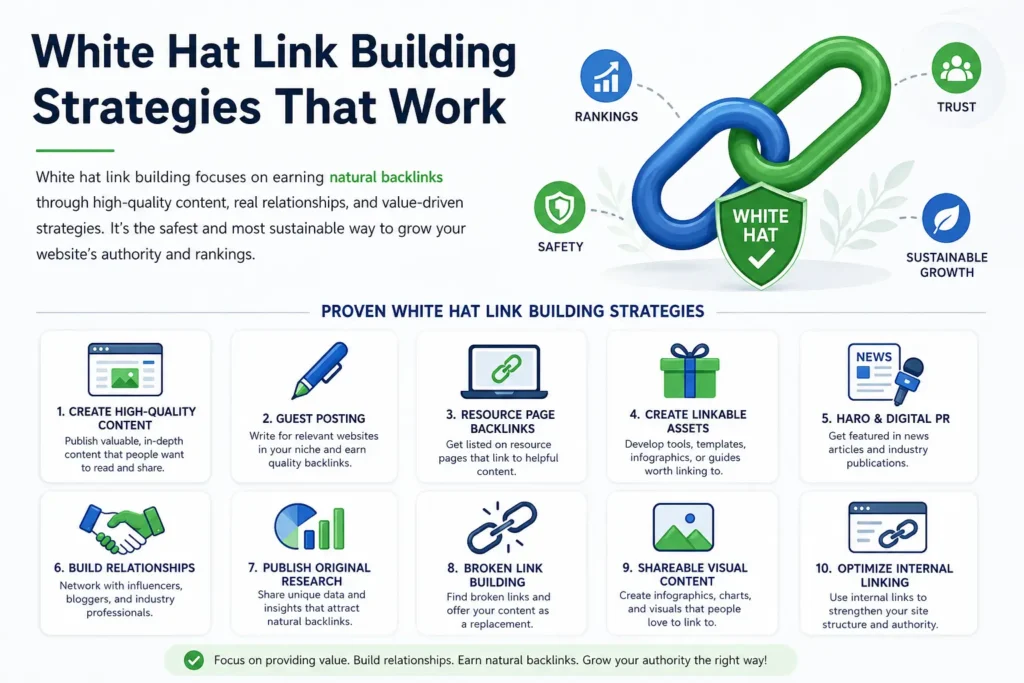
What Is White Hat Link Building?
White hat link building means earning backlinks naturally through ethical SEO methods.
These strategies follow search engine guidelines and focus on providing real value to users.
White hat backlinks usually come from:
- Helpful content
- Editorial mentions
- Guest contributions
- Digital PR campaigns
- Resource pages
- Industry relationships
Unlike black hat SEO, white hat link building focuses on sustainability.
Why White Hat Backlinks Matter
Google values trust and authority more than ever.
Websites using manipulative backlinks often struggle after algorithm updates.
White hat link building helps websites:
- Improve rankings safely
- Build domain authority
- Increase referral traffic
- Strengthen brand trust
- Create long-term SEO growth
Safe backlinks reduce the risk of penalties and protect your website reputation.
White Hat vs Black Hat Link Building
| White Hat SEO | Black Hat SEO |
|---|---|
| Natural backlinks | Spam backlinks |
| Long-term growth | Short-term manipulation |
| Google compliant | High penalty risk |
| User-focused | Search engine manipulation |
| Sustainable rankings | Unstable rankings |
White hat SEO takes more effort, but the results last longer.
Create High-Quality Content That Attracts Links
Content remains the foundation of organic link building.
People naturally link to valuable resources.
The best content types for earning backlinks include:
- Research studies
- Original statistics
- Ultimate guides
- Infographics
- Case studies
- Industry reports
For example, companies like HubSpot and Ahrefs consistently earn backlinks because they publish data-driven content.
Use Guest Posting the Right Way
Guest posting still works when done correctly.
The key is quality and relevance.
Focus on:
- Real websites
- Relevant industries
- Helpful content
- Editorial standards
Avoid:
- Spam guest post farms
- PBN websites
- Irrelevant niches
A single relevant backlink from a trusted website often provides more value than dozens of low-quality links.
Build Resource Page Backlinks
Many websites maintain useful resource pages.
These pages link to helpful tools, guides, and references.
You can earn backlinks by offering genuinely useful content.
Example searches:
- “SEO resources”
- “marketing tools”
- “helpful industry guides”
Then pitch your content naturally.
This strategy works especially well for:
- SaaS companies
- educational content
- free tools
- industry reports
Create Linkable Assets
Linkable assets are pieces of content designed specifically to attract backlinks.
Examples include:
- Free templates
- Calculators
- Checklists
- Interactive tools
- Research reports
These assets provide long-term organic backlink opportunities.
For example, Canva earned massive authority partly through free design tools and templates.
Use HARO and Digital PR
HARO stands for “Help a Reporter Out.”
Journalists request expert opinions for stories.
If your insights get featured, you can earn authoritative backlinks from news websites.
Digital PR helps generate:
- media mentions
- brand visibility
- editorial links
- authority signals
These backlinks are among the safest and strongest in SEO.
Build Relationships in Your Industry
Networking creates natural backlink opportunities.
Strong relationships often lead to:
- collaborations
- interviews
- mentions
- podcast invitations
- expert roundups
SEO is increasingly relationship-driven.
Real partnerships generate safer backlinks than aggressive outreach.
Publish Original Research and Statistics
Data attracts links naturally.
Writers, bloggers, and journalists often reference original research.
For example:
- survey reports
- market analysis
- SEO studies
- consumer trends
These assets often become backlink magnets.
According to industry studies, research-based content earns significantly more backlinks than standard blog posts.
Use Broken Link Building
Broken link building remains an effective white hat strategy.
The process is simple:
- Find broken links on relevant websites
- Create similar content
- Suggest your content as a replacement
This helps website owners fix issues while earning backlinks naturally.
Popular tools include:
- Ahrefs
- SEMrush
- Check My Links
Create Shareable Visual Content
Visual assets increase backlink opportunities.
Examples:
- infographics
- charts
- diagrams
- industry visuals
People often embed visuals while linking back to the original source.
High-quality visuals improve:
- shares
- engagement
- backlinks
- referral traffic
Focus on Topical Authority
Search engines now reward websites that deeply cover specific topics.
Instead of publishing random content, build content clusters around related themes.
For example, an SEO website can create clusters about:
- white hat link building
- technical SEO
- backlinks
- content marketing
- on-page SEO
This strengthens relevance and authority.
Optimize Internal Linking
Internal links support SEO and user experience.
They help:
- distribute authority
- improve crawlability
- guide users
- strengthen topic relevance
For example, this article can internally link to:
- backlink profile guide
- dofollow vs nofollow backlinks
- technical SEO checklist
- AI and SEO trends
Strong internal linking improves overall SEO structure.
Common White Hat Link Building Mistakes
Focusing Only on DA or DR
High metrics alone do not guarantee quality.
Traffic relevance matters more.
Buying Spammy Links
Cheap backlinks often create long-term SEO risks.
Ignoring Content Quality
Weak content rarely earns natural backlinks.
Overusing Exact Match Anchors
Natural anchor diversity is important for safe SEO.
Best Tools for White Hat Link Building
| Tool | Purpose |
| Ahrefs | Backlink research |
| SEMrush | Competitor analysis |
| BuzzSumo | Content discovery |
| Hunter.io | Outreach emails |
| Google Search Console | Link monitoring |
These tools improve outreach efficiency and backlink analysis.
Pro Tips for Earning Organic Backlinks
Focus on Value First
People link to useful content naturally.
Build Real Authority
Expertise matters more than publishing volume.
Create Evergreen Content
Evergreen resources continue earning backlinks over time.
Promote Your Content
Great content still needs visibility.
Use:
- email outreach
- communities
- industry forums
Think Long Term
White hat SEO takes time, but the results are sustainable.
Why Safe Backlinks Matter More in 2026
Search engines are becoming smarter every year.
Google now identifies:
- spam networks
- paid link schemes
- AI spam content
- manipulative backlinks
Safe backlinks help businesses avoid penalties and maintain stable rankings.
Long-term SEO success depends on trust and authority.
Internal Linking Opportunities
You can internally link this article with:
- What are backlinks in SEO
- Dofollow vs nofollow backlinks
- Link building mistakes
- Technical SEO guide
- Topical authority explained
- AI and SEO trends
External Link Opportunity
For official backlink guidelines, use this anchor text:
Google Search Essentials link spam policies
FAQs
What is white hat link building?
White hat link building involves earning backlinks naturally through ethical SEO practices that follow Google guidelines.
Are white hat backlinks safe?
Yes. White hat backlinks are considered safe because they focus on quality, relevance, and user value.
How do natural backlinks help SEO?
Natural backlinks improve authority, trust, visibility, and search rankings over time.
What are the best white hat link building strategies?
The best strategies include guest posting, digital PR, original research, broken link building, and creating linkable assets.
