

Dofollow vs Nofollow Backlinks: Which One Helps SEO More?
Backlinks remain one of the strongest ranking factors in SEO. But many website owners still struggle to understand the real difference between dofollow and nofollow links.
Some marketers only chase dofollow backlinks. Others believe nofollow links are useless.
That approach hurts long-term SEO growth.
The truth is simple. Both link types play important roles in a healthy SEO strategy.
Understanding how they work can help you build stronger rankings, safer backlink profiles, and better organic traffic.
In this guide, I will explain the difference between nofollow and dofollow links, how Google treats them, and which one actually helps SEO more.
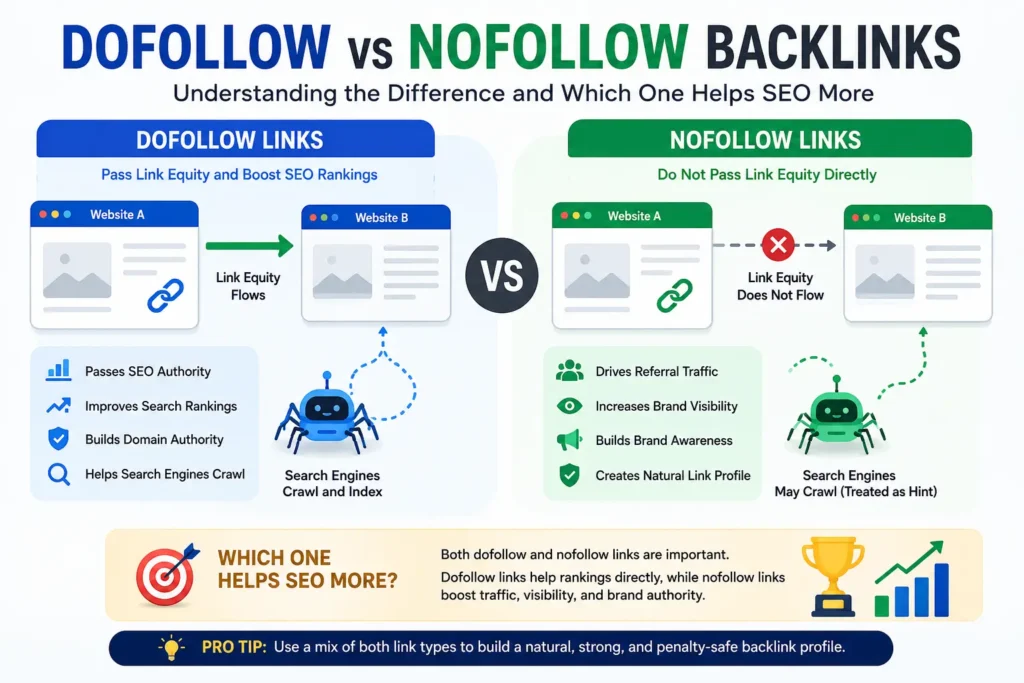
What Are Dofollow Backlinks?
A dofollow backlink allows search engines to pass link authority from one website to another.
These links help transfer PageRank and ranking signals.
By default, every normal hyperlink is dofollow unless a special attribute changes it.
Example:
<a href="https://example.com">Example Link</a>Dofollow backlinks help search engines:
- Discover pages
- Understand authority
- Measure trust
- Evaluate relevance
SEO professionals strongly value these links because they directly influence rankings.
What Are Nofollow Backlinks?
A nofollow backlink contains a special HTML tag that tells search engines not to pass full authority to the linked page.
Example:
<a href="https://example.com" rel="nofollow">Example Link</a>Google introduced this attribute to reduce spammy link building.
Today, many websites automatically use nofollow tags on:
- Blog comments
- Social media posts
- Forums
- Sponsored content
- User-generated content
However, nofollow links still provide SEO value in indirect ways.
Key Difference Between Dofollow and Nofollow Links
Here is a simple comparison table.
| Feature | Dofollow Links | Nofollow Links |
|---|---|---|
| Pass SEO Authority | Yes | Limited |
| Influence Rankings | Directly | Indirectly |
| Help Crawling | Yes | Sometimes |
| Drive Referral Traffic | Yes | Yes |
| Natural Link Profile | Important | Important |
| Common Sources | Guest posts, editorial links | Forums, social media |
Both link types support SEO differently.
How Google Treats Nofollow Backlinks Today
Google updated its nofollow policy in 2019.
Previously, Google ignored these links completely for ranking purposes.
Now, Google treats nofollow attributes as hints instead of strict commands.
This means Google may still:
- Crawl nofollow links
- Discover pages through them
- Analyze context
- Evaluate link relationships
That update made nofollow backlinks more valuable than before.
According to Google, search algorithms now use multiple signals beyond traditional PageRank.
Why Dofollow Backlinks Matter for SEO
They Pass Link Equity
Dofollow links transfer authority from one site to another.
This authority helps pages rank higher in search results.
A backlink from an authoritative website like Forbes or HubSpot can significantly improve visibility.
They Improve Domain Authority
SEO tools like Moz use metrics such as Domain Authority to estimate ranking strength.
Dofollow backlinks often increase these metrics.
They Help Search Engines Understand Trust
When trusted websites link to your content, search engines see positive trust signals.
That trust can improve keyword rankings over time.
Why Nofollow Backlinks Still Help SEO
Many marketers underestimate nofollow backlinks.
That mistake limits growth opportunities.
They Drive Referral Traffic
Traffic remains valuable regardless of link attributes.
For example:
often generate strong referral traffic even with nofollow tags.
Visitors from these platforms may:
- Share your content
- Link naturally
- Subscribe to newsletters
- Become customers
They Build Brand Visibility
Modern SEO depends heavily on brand authority.
Mentions across trusted websites improve recognition and trust.
Google increasingly values strong brand entities.
They Create Natural Backlink Profiles
A website with only dofollow backlinks looks unnatural.
Healthy websites earn a mix of:
- Dofollow backlinks
- Nofollow backlinks
- Brand mentions
- Social shares
Natural diversity protects websites from algorithmic penalties.
Which Backlink Type Helps SEO More?
The answer depends on your SEO goals.
Dofollow Links Help More for Rankings
If your goal is improving keyword rankings directly, dofollow backlinks usually provide stronger impact.
They pass ranking authority and improve link equity.
Nofollow Links Help More for Visibility and Traffic
If your goal is:
- Brand awareness
- Audience growth
- Referral traffic
- Content discovery
nofollow backlinks can become extremely valuable.
Smart SEO Strategies Use Both
Professional SEO campaigns combine both link types naturally.
That approach creates sustainable growth.
Real-World Example of Link Value
Imagine your article gets shared on Reddit.
The Reddit backlink is nofollow.
However:
- Thousands of people visit your content
- Bloggers discover your article
- Journalists reference your research
- Industry experts share your study
Soon, you earn several editorial dofollow backlinks naturally.
The original nofollow link triggered the entire process.
This happens regularly in content marketing.
Best Sources for Dofollow Backlinks
High-quality dofollow links often come from:
- Guest posts
- Editorial mentions
- Niche blogs
- Resource pages
- News websites
Strong content increases your chances of earning these links naturally.
Best Sources for Nofollow Backlinks
Helpful nofollow backlink sources include:
- Quora
- YouTube
- Medium
- Wikipedia
These platforms provide strong exposure and audience reach.
Common Mistakes People Make
Chasing Only Dofollow Links
This creates unnatural backlink patterns.
Google values authenticity.
Balanced profiles perform better long term.
Ignoring Traffic Value
Many nofollow backlinks send highly targeted visitors.
Traffic often matters more than raw link authority.
Buying Spammy Backlinks
Low-quality links damage trust.
Avoid:
- Link farms
- Automated blog comments
- Fake directories
- Spam forums
Quality always beats quantity.
Dofollow vs Nofollow Links for Beginners
If you are starting SEO, focus on:
- Creating helpful content
- Building relationships
- Earning mentions naturally
- Participating in communities
Do not obsess over link attributes initially.
Strong content naturally attracts both link types.
SEO Tools to Analyze Backlinks
Professional marketers use these tools to monitor backlinks.
| Tool | Main Purpose | Popular Feature |
| Ahrefs | Backlink research | Link authority analysis |
| SEMrush | SEO auditing | Toxic backlink reports |
| Moz | Domain tracking | Spam score analysis |
| Google Search Console | Link monitoring | External link data |
These tools help identify backlink diversity and quality.
Pro Tips for Building Better Backlinks
Focus on Relevance First
A relevant backlink often performs better than a random high-authority link.
Context matters heavily.
Create Data-Driven Content
Original research attracts natural backlinks.
Statistics and case studies perform especially well.
Use Community Marketing
Helpful participation on Reddit and Quora can increase visibility significantly.
Build Topical Authority
Publishing multiple related articles strengthens SEO signals.
For deeper insights about nofollow backlinks, read: https://serpseoboost.com/do-nofollow-links-help-seo/
Internal Linking Opportunities
You can internally link this article with:
- What are backlinks in SEO
- How link building works
- Off-page SEO techniques
- Anchor text optimization
- Link building mistakes
- Backlink profile guide
FAQs
What is the difference between dofollow and nofollow links?
Dofollow links pass ranking authority to another website. Nofollow links usually do not pass full authority directly but still help through traffic and visibility.
Are nofollow backlinks bad for SEO?
No. Nofollow backlinks can improve brand awareness, referral traffic, and natural backlink diversity.
Which backlink type improves rankings faster?
Dofollow backlinks usually impact rankings faster because they transfer link equity directly.
Should a website have both dofollow and nofollow backlinks?
Yes. A balanced backlink profile looks more natural and supports long-term SEO growth.
