
11 Powerful Ways a SERP Checker Helps Improve Rankings Faster
Search engine optimization depends heavily on rankings. If you cannot measure keyword positions, you cannot improve them. That is where a SERP checker becomes essential.
Whether you manage a blog, eCommerce store, or SEO agency, you need accurate data. Monitoring search positions helps you understand which pages perform well and which ones need optimization.
A reliable ranking tracker allows you to analyze keyword movement, identify opportunities, and react before competitors gain an advantage.
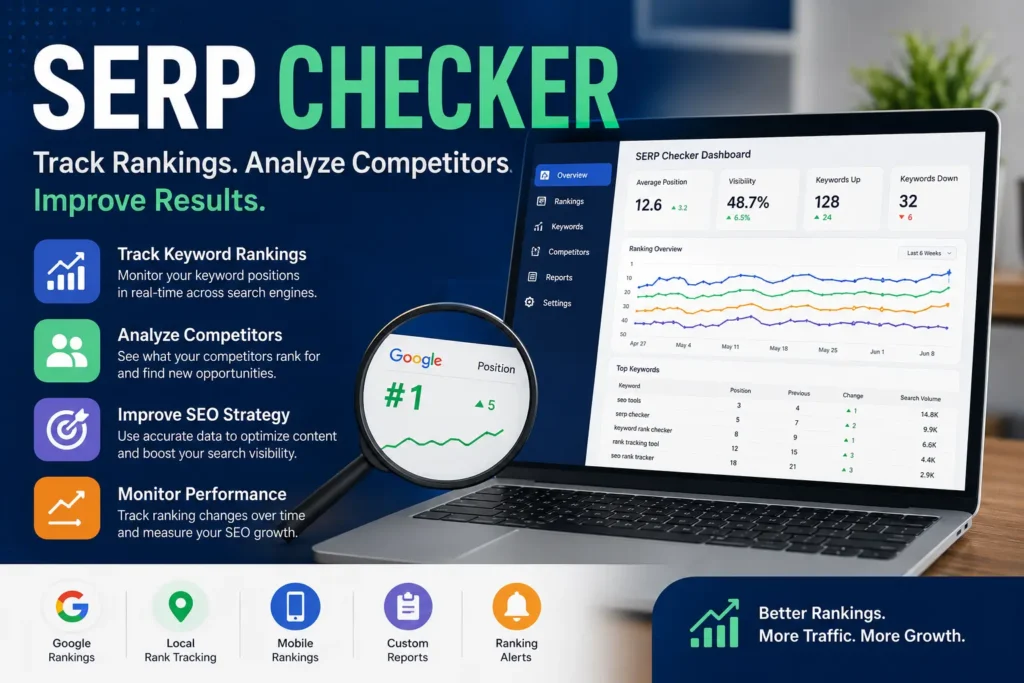
What Is a SERP Checker?
A SERP checker is an SEO tool that helps monitor where your pages appear on search engine results pages. It shows keyword positions and tracks changes over time.
These tools provide insights into:
- Keyword rankings
- Search visibility
- Competitor positions
- SERP features
- Ranking history
- Local search performance
Many SEO professionals use tools like Ahrefs, SEMrush, Moz, SE Ranking, and Google Search Console to track positions daily.
According to BrightEdge, organic search drives more than 53% of website traffic. This highlights the importance of tracking rankings consistently.
Why SERP Rankings Matter
Ranking improvements directly impact traffic and conversions.
For example, the first position on Google receives around 27% of clicks according to Backlinko. Lower positions receive significantly fewer visits.
Tracking rankings helps you:
- Measure SEO performance
- Discover ranking drops
- Analyze competitors
- Find optimization opportunities
- Improve click-through rates
Without monitoring, SEO becomes guesswork.
How a SERP Rank Checker Works
Most rank-tracking tools collect data from Google and other search engines.
They analyze:
| Metric | Purpose |
|---|---|
| Keyword Position | Shows ranking location |
| Search Volume | Measures demand |
| SERP Features | Tracks snippets and maps |
| Competitor Rankings | Identifies opportunities |
| Historical Data | Measures progress |
| Visibility Score | Evaluates overall performance |
Many tools update data daily or weekly.
Benefits of Using a Google SERP Tracker
Monitor Keyword Performance
Tracking keywords helps you understand what works.
For example, if a page moves from position 15 to position 8, your optimization strategy is delivering results.
Identify Ranking Drops Quickly
Algorithm updates happen frequently.
A tracking tool alerts you when rankings decline so you can react immediately.
Analyze Competitors
Competitive analysis reveals opportunities.
You can discover:
- Competitor keywords
- Top-performing pages
- Content gaps
- Ranking trends
Measure SEO ROI
SEO campaigns require measurable results.
A ranking tracker helps prove:
- Traffic growth
- Visibility improvements
- Keyword gains
- Revenue increases
Best SERP Tools Available Today
Several tools dominate the industry.
Google Search Console
Free and reliable.
Features:
- Click data
- Impressions
- Average positions
- Page performance
Ahrefs
Popular among agencies.
Strengths:
- Keyword tracking
- Competitor analysis
- Backlink insights
- Historical ranking data
SEMrush
Excellent all-in-one SEO platform.
Capabilities:
- Position tracking
- Site audits
- Keyword research
- Competitor intelligence
SE Ranking
Affordable and accurate.
Features:
- Daily updates
- Local tracking
- White-label reports
Moz Pro
Trusted by many marketers.
Provides:
- Visibility scores
- Rank tracking
- Keyword opportunities
Free SERP Checker Tools Worth Trying
Many beginners start with free solutions.
Popular choices include:
- Google Search Console
- Ubersuggest
- SERProbot
- Small SEO Tools
- WhatsMySERP
Free tools help new websites monitor basic positions without large investments.
SERP Checker Multiple Keywords Tracking
Most websites target hundreds of keywords.
Manual checking becomes impossible.
Modern tracking software allows multiple keyword monitoring.
Benefits include:
- Bulk keyword analysis
- Group tracking
- Automated reports
- Trend visualization
SEO agencies often track thousands of keywords simultaneously.
Understanding SERP Monitoring and SEO Growth
Ranking fluctuations are normal.
Daily changes happen because of:
- Algorithm updates
- Competitor optimization
- Content freshness
- User behavior
- Search intent shifts
Consistent monitoring helps separate temporary drops from long-term issues.
I personally recommend weekly tracking for smaller websites and daily tracking for competitive industries.
Common SERP Tracking Mistakes
Checking Rankings Manually
Google personalizes results.
Manual searches may provide inaccurate positions.
Use professional tools instead.
Ignoring Search Intent
Higher rankings mean little if content does not satisfy user intent.
Focus on solving user problems.
Tracking Too Many Keywords
Quality matters more than quantity.
Concentrate on:
- High-converting keywords
- Commercial terms
- High-traffic opportunities
Ignoring Competitors
Competitor analysis provides valuable insights.
Monitor:
- Content quality
- Backlinks
- Featured snippets
- Keyword gaps
Practical Example of SERP Tracking
Suppose you own an HVAC website.
Target keyword:
“AC repair Houston”
Initial ranking:
Position 22
After:
- Improving content
- Adding internal links
- Building backlinks
Ranking improves to position 7.
Traffic increases by 160%.
Without a ranking tracker, measuring that progress becomes difficult.
Pro Tips for Better SERP Tracking
Track Local Rankings
Location affects search results.
Local businesses should monitor city-specific keywords.
Monitor Mobile Rankings
More than 60% of Google searches come from mobile devices.
Mobile rankings matter as much as desktop rankings.
Focus on SERP Features
Google results now include:
- Featured snippets
- Maps
- Videos
- FAQs
- Images
Winning these features improves visibility.
Analyze Historical Trends
Historical data helps identify:
- Seasonal keywords
- Traffic patterns
- Algorithm effects
Use Multiple Tools
Combining Google Search Console with Ahrefs or SEMrush produces more accurate insights.
SERP Competition Ranking Tools and Competitor Analysis
Competitor tracking reveals hidden opportunities.
Important metrics include:
| Metric | Why It Matters |
| Domain Authority | Measures authority |
| Backlinks | Influences rankings |
| Content Quality | Affects engagement |
| Search Visibility | Shows market share |
| Top Keywords | Reveals opportunities |
Competitive analysis improves strategic decisions.
Statistics That Show Why SERP Tracking Matters
- Google processes over 8.5 billion searches daily.
- Organic search generates 53% of website traffic.
- Position one receives around 27% CTR.
- Top three positions receive more than 54% of clicks.
- More than 90% of pages receive no organic traffic.
These numbers demonstrate why rankings require continuous monitoring.
Frequently Asked Questions
What is a SERP checker?
A SERP checker is a tool that monitors keyword positions on search engines and helps analyze ranking performance over time.
Is there a free SERP checker available?
Yes. Google Search Console, Ubersuggest, and SERProbot provide free ranking data and basic keyword tracking.
How often should I monitor rankings?
Most websites should track rankings weekly. Competitive industries benefit from daily monitoring.
Which is the best Google SERP tracker?
Ahrefs, SEMrush, SE Ranking, Moz Pro, and Google Search Console are among the most trusted solutions for tracking keyword positions and measuring SEO performance.
