
How to Evaluate Backlink Quality in 2026: Complete Step-by-Step Checklist
Backlinks are still one of the strongest ranking factors in modern SEO but not all links are equal. In 2026, search engines are smarter, link spam detection is stronger, and quality signals go far beyond simple Domain Authority scores.
If you’re investing in outreach, guest posting, or digital PR, you must evaluate backlink quality before building or buying links. This guide gives you a step-by-step checklist, real benchmarks, and comparison tables to help you make data-driven decisions.
We’ll focus on measurable metrics:
- Domain Rating / Domain Authority
- Topical relevance
- Traffic quality
- Anchor distribution
- Spam score
Why Backlink Evaluation Matters in 2026
Google’s algorithm now weighs context, trust signals, and link intent more heavily than raw authority. A single highly relevant backlink can outperform five generic high-DR links.
For example:
| Scenario | Result |
|---|---|
| DR 80 site (general news) linking to a niche SaaS site | Moderate impact |
| DR 45 niche SaaS blog linking to the same SaaS site | Higher contextual impact |
| DR 30 spam blog network link | Negative risk |
This is why evaluating quality is more important than chasing numbers.
Step 1: Check Domain Rating / Domain Authority
Domain Rating (Ahrefs), Domain Authority (Moz), and Authority Score (SEMrush) estimate overall backlink strength.
Recommended Benchmarks (2026)
| DR Range | Quality Level | When to Accept |
|---|---|---|
| 70+ | Premium | High competition niches |
| 50–69 | Strong | Most SEO campaigns |
| 30–49 | Moderate | If highly relevant |
| Below 30 | Risky | Only if hyper-niche and real traffic |
Important: Don’t Rely on DR Alone
A DR 70 site with 0 organic traffic is often inflated by PBN backlinks.
Always cross-check traffic and relevance before publishing through your Guest Posting Services page or outreach campaigns.
If you’re offering backlink solutions, clearly explain this process on your Backlink Services page so clients understand your quality control standards.
Step 2: Analyze Topical Relevance
Google now prioritizes topical authority clusters.
Example:
If you run a digital marketing website:
- ✔ Marketing blog backlink → Highly relevant
- ✔ SaaS tools website backlink → Relevant
- ✖ Casino website backlink → Low relevance
How to Measure Topical Relevance
- Check main category of the site
- Review recent 10 blog posts
- Analyze anchor context
- Check keywords the domain ranks for
Relevance Scoring System
| Factor | Score (1–5) |
|---|---|
| Niche match | 5 |
| Related industry | 3 |
| General content | 2 |
| Irrelevant niche | 1 |
Only pursue links scoring 4 or above.
This filtering step should be part of your professional Link Building Services workflow.
Step 3: Evaluate Traffic Quality (Not Just Traffic Volume)
High traffic does not always mean high value.
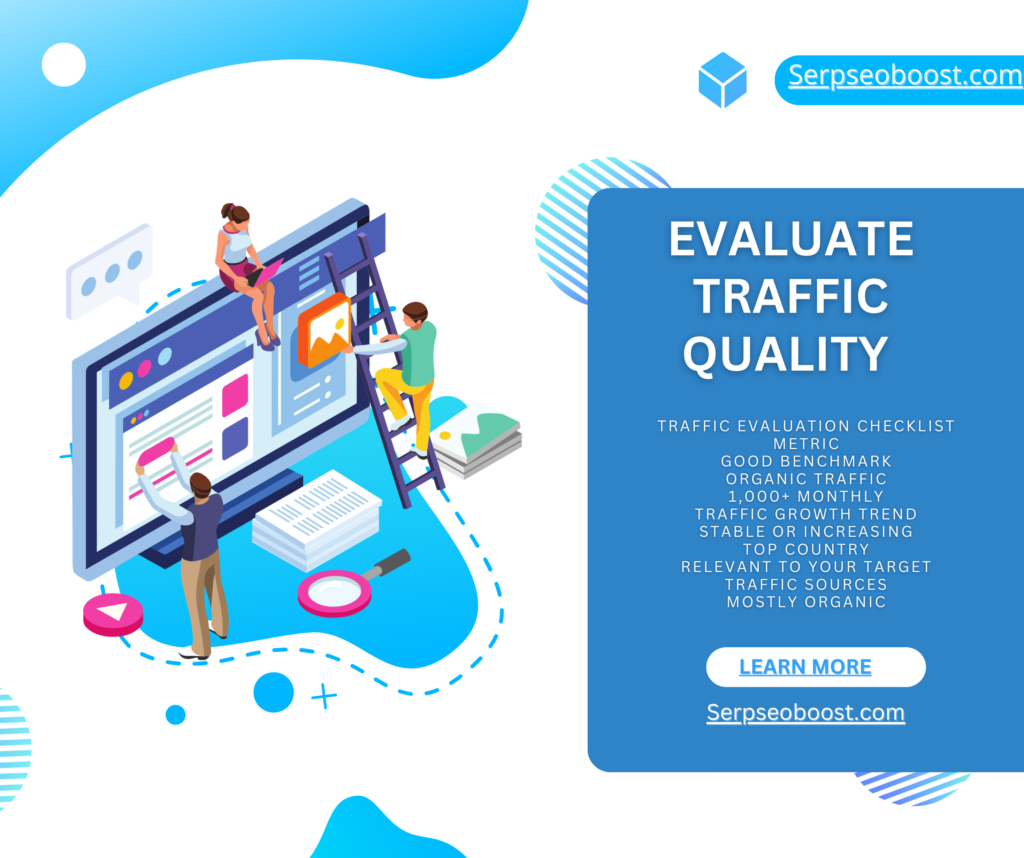
Traffic Evaluation Checklist
| Metric | Good Benchmark |
|---|---|
| Organic traffic | 1,000+ monthly |
| Traffic growth trend | Stable or increasing |
| Top country | Relevant to your target |
| Traffic sources | Mostly organic |
Example Comparison
| Site | DR | Traffic | Traffic Trend | Verdict |
|---|---|---|---|---|
| Site A | 72 | 120 | Declining | Avoid |
| Site B | 48 | 3,500 | Growing | Good option |
| Site C | 55 | 9,000 | Stable | Strong option |
A DR 48 site with 3,500 growing organic visitors is more valuable than a DR 72 site with no organic rankings.
This is why data validation is critical before publishing through Guest Posting Services or pitching to clients.
Step 4: Check Anchor Distribution
Anchor text manipulation is one of the fastest ways to trigger algorithmic penalties.
Ideal Anchor Distribution (2026 Safe Model)
| Anchor Type | Recommended % |
|---|---|
| Branded | 40–50% |
| Naked URL | 20–30% |
| Generic (click here, read more) | 10–15% |
| Partial match | 10–15% |
| Exact match | Under 5% |
Red Flag Example
If a site has:
- 40% exact match anchors
- Multiple commercial keywords
- No brand anchors
That site may already be penalized.
Before accepting link placements via your Backlink Services, review anchor ratios using tools like Ahrefs or SEMrush.
Step 5: Analyze Spam Score & Link Profile Cleanliness
Spam Score (Moz) and toxic link indicators (SEMrush) help identify risky domains.
Spam Score Benchmarks
| Spam Score | Risk Level |
|---|---|
| 0–3% | Safe |
| 4–7% | Monitor |
| 8–15% | Risky |
| 15%+ | Avoid |
But don’t rely on spam score alone.
Additional Red Flags:
- Sudden DR spikes
- Thousands of outbound links
- Footer/sidebar links to unrelated niches
- Gambling / adult links mixed with business blogs
Quick Backlink Quality Checklist
Before building or approving any backlink:
✔ DR 40+ (or niche-relevant 30+)
✔ 1,000+ organic traffic
✔ Growing or stable trend
✔ 4+ topical relevance score
✔ Safe anchor profile
✔ Spam score under 7%
✔ Real authors & content consistency
If 2 or more fail → Reject.
Advanced 2026 Evaluation Factors
Beyond core metrics, also check:
- Indexed pages in Google
- Outbound link ratio
- Content originality
- Editorial standards
- Placement type (contextual > sidebar > footer)
Contextual in-content links remain 3–5x more powerful than author bio links based on campaign data across SEO agencies.
Cost vs Quality Comparison
| Link Type | Average Cost | Risk Level | SEO Impact |
|---|---|---|---|
| Cheap PBN | $20–50 | High | Short-term |
| Low-DR blog | $50–100 | Medium | Moderate |
| Real niche blog | $100–250 | Low | Strong |
| Premium authority | $300–800 | Very Low | High |
Choosing quality links reduces long-term recovery costs from penalties.
Final Thoughts
In 2026, evaluating backlink quality is about context + authority + traffic + safety.
Stop asking:
“How high is the DR?”
Start asking:
“Is this link relevant, trusted, and naturally integrated?”
If you provide Link Building Services, clearly showcasing this evaluation framework builds trust and justifies premium pricing. Clients want transparency, data, and safety—not just link volume.
A well-evaluated backlink portfolio will:
- Deliver sustainable organic growth
- Increase ranking stability
- Reduce penalty risk
- Improve topical authority
Frequently Asked Questions (FAQs)
1. What is considered a high-quality backlink in 2026?
A high-quality backlink in 2026 is one that comes from a relevant, authoritative website with real organic traffic, natural anchor text distribution, and low spam signals. Ideally, it should:
- Have DR 40+ (or strong niche relevance)
- Generate 1,000+ organic monthly traffic
- Be contextually placed within content
- Maintain a spam score below 7%
Quality today is more about context and trust than just authority metrics.
2. Is Domain Rating (DR) the most important backlink metric?
No. Domain Rating is important, but it should never be evaluated alone.
For example:
- DR 70 with 0 traffic = weak value
- DR 45 with 3,000 growing organic traffic = stronger value
Always combine DR with:
- Topical relevance
- Traffic quality
- Anchor profile
- Spam indicators
3. How much organic traffic should a website have before I get a backlink from it?
A safe benchmark is 1,000+ monthly organic visitors. However, if the website is highly niche-specific and relevant, even 500+ real visitors may be acceptable.
Avoid domains with:
- Sudden traffic drops
- No ranking keywords
- Traffic from unrelated countries
4. What is a safe anchor text distribution in 2026?
A natural backlink profile should follow this approximate ratio:
- 40–50% branded anchors
- 20–30% naked URLs
- 10–15% generic anchors
- 10–15% partial match
- Under 5% exact match
Over-optimized anchor text is one of the biggest penalty triggers.
5. What spam score is acceptable when evaluating backlinks?
A spam score between 0–3% is ideal, and 4–7% is generally safe. Anything above 8% requires deeper analysis.
However, spam score alone is not enough. Also check:
- Outbound link patterns
- Content quality
- Link neighborhoods
- Sudden authority spikes
6. Are contextual backlinks more powerful than author bio links?
Yes. Contextual in-content links are typically 3–5x more impactful than author bio or footer links because they:
- Pass stronger contextual signals
- Appear editorially placed
- Carry higher user engagement value
For sustainable results, prioritize contextual placements.
7. How many high-quality backlinks do I need to rank?
There is no fixed number. It depends on:
- Your niche competition
- Competitor backlink profile
- Keyword difficulty
- Content quality
In medium competition niches, 20–50 high-quality backlinks can significantly impact rankings, while competitive industries may require 100+.
8. Should I avoid websites that sell guest posts?
Not necessarily. Many legitimate publishers monetize content.
However, avoid sites that:
- Publish unrelated niche content daily
- Have excessive outbound links
- Show artificial traffic patterns
- Lack real editorial standards
Quality screening is more important than whether the site charges.
9. Can low-DR websites still provide valuable backlinks?
Yes, if they are:
- Highly niche-relevant
- Real businesses or communities
- Generating genuine organic traffic
A DR 30 niche blog can sometimes outperform a DR 70 general news site in ranking impact.
10. How often should I audit my backlink profile?
You should audit your backlink profile:
- Once every 3 months (active SEO campaigns)
- Every 6 months (stable sites)
- Immediately after sudden ranking drops
Regular audits help detect toxic links early and maintain long-term SEO stability.
